Padma Bridge: Opening up Opportunities for Greater Regional Connectivity
📝
🕐 2022-08-23 20:04:33

Air Cdre (Retd) Ishfaq Ilahi Choudhury, ndc, psc

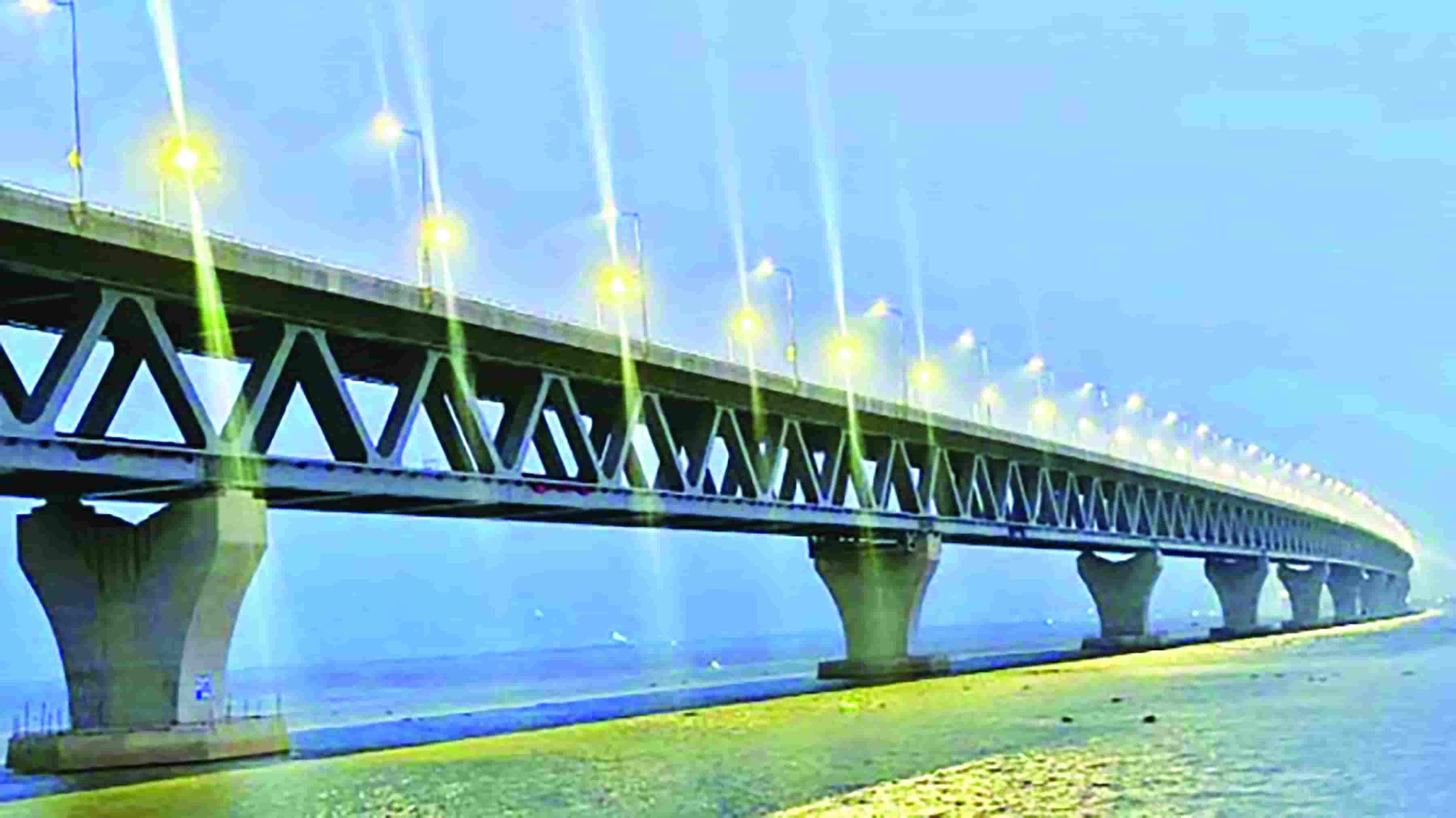
The opening of the bridge over the mighty river Padma on 25 June 2022 by Sheikh Hasina, Hon’ble Prime Minister of Bangladesh, was a milestone event in the history of Bangladesh. There are many reasons for us to be proud of this achievement. Many observers termed this event our greatest moment since 16 December 1971, when the occupation Pakistani forces surrendered and a liberated Bangladesh emerged. The building of the Padma Bridge, connecting the south eastern Bangladesh with the capital and beyond by road, and in a few years by rail, has been the single most expensive development undertaking by the government; the cost so far has been Tk. 30,000 crore or about US$ 3.7 billion. More importantly, the whole project, spreading over an eight year period, has been financed totally from domestic resources. This was a challenging undertaking by the Government when major aid partners such as WB, ADB or JAICA had withdrawn their financial support in 2012 on the alleged corruption charges levelled against a few high government officials and political high-ups. This had put the whole project into uncertainties at a time when it was about to be launched. The Government of Bangladesh, under the leadership of the Hon’ble Prime Minister Sheikh Hasina, decided to go ahead with the project, notwithstanding the absence of any external aid agencies. There were many, within the country and outside, who were skeptical of the government taking such a gigantic challenge at a time when the country was still struggling with its development efforts. Besides huge financial involvement, the project faced stupendous engineering challenges, some never before faced anywhere else in the world. Never in the history of bridge-building has a river as powerful as the Padma been bridged. For example, the Padma’s 20 seconds water discharge during monsoon equals to 24 hours’ water requirement of a megacity like Dhaka. The Padma is a meandering river, shifting its courses all the time. In order to ensure that the river continues to flow down the bridge site, the engineers had to construct massive river control structures that alone cost more than the bridge itself. Indeed, river management will continue to be an ongoing problem for this project. The bridge is founded on an alluvial soil where some of the piles had to be driven more than 300 ft. into the earth; this was another world record. Few hundred thousand people had to be rehabilitated and compensated. The fact, that all these challenges were overcome and the road bridge has been opened to traffic is a matter of great pride for the nation. With the rail link that would be opened in another two years, the communication system in Bangladesh will undergo a revolutionary change.
The bridge has reduced travel time from Dhaka to the southern cities of Khulna or Barisal by more than half. The enormous tail back that we often used to see at the ferry points will no longer be there. The under-construction express way on either side of the Padma Bridge and the high-speed rail link will not only bring the southeastern Bangladesh closer to the rest of the country, it will open up new routes of international road and rail traffic through Bangladesh to Indian northeast and beyond. Once the under-construction bridge over the Modhumati river opens in a few months’ time, the time taken by a bus from Dhaka to Kolkata will come down to less than 8 hours. With the new high speed rail link to be opened by 2024, it will take less than 6 hours to reach Kolkata from Dhaka. With the completion of Dhaka city by-pass, Elevated Expressway, Dhaka-Sylhet 4-lane Highway, the road traffic from India to its north eastern states will be even faster and smoother, offering a major source of transit revenue for Bangladesh. Especially dramatic gain will be for the people of Tripura, Mizoram and other NE states for whom Kolkata by road or rail could be a ‘Day-Trip’ rather than the long, circuitous journey at present.

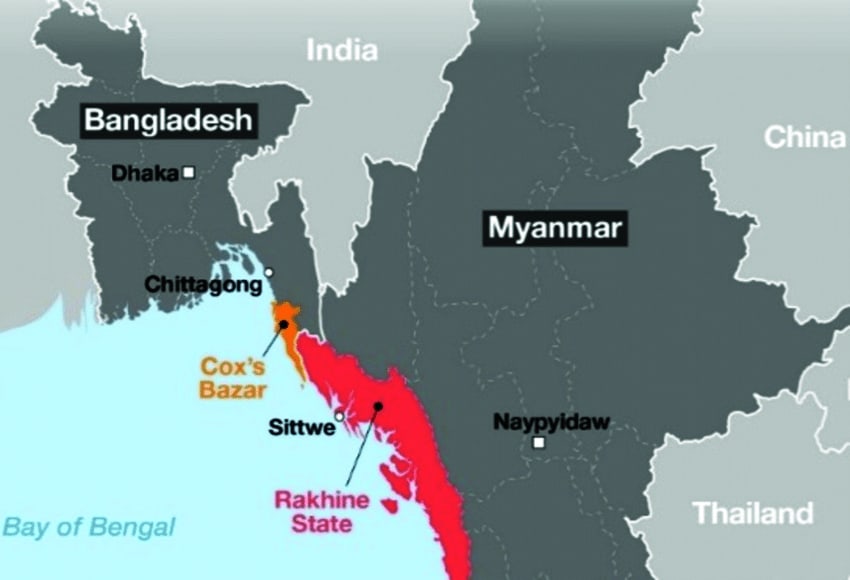
The bridge has brought the ports of Mongla and Payera closer to Dhaka than that of Chottogram. That means not only these two ports will be more attractive for the shippers, it will also help reduce pressure on the port of Chottogram. Once the road-rail connectivity is established, Bangladesh can be a major hub for goods and passenger traffic moving to and from NE India, Nepal and Bhutan. With the ongoing projects of better road and rail connectivity with Chottogram and the deep sea port in Matarbari (JAICA financed US$ 2.1 billion project), Bangladesh will be able to offer world-class port and transit facilities to all its neighbours. Bangladesh straddles across South and Southeast Asia. The road and rail connectivity between Southeast Asia, China and the Far East with the rest of Asia must necessarily pass through Bangladesh. We have already established 4-lane highway up to Myanmar border at Gundum, Cox’s Bazar, and the rail link is also under way. Once Myanmar government agrees, the road-rail link from Kolkata to Kunming, China could be a reality. Bangladesh is central to the Trans Asian Railway Network (TARN) as well as Asian Highway (AH). We must seize this geostrategic advantage to better position ourselves in the regional and global power play.
The opening of the Padma Bridge has already created a ripple effect far beyond our border. That this nation, snubbed in 1971 by the then US Secretary of State Dr. Henry Kissinger as a “Basket Case”, can rise up to implement a multi-billion dollar project of immense engineering challenges, all by its own internal resources, is a point well appreciated by the world community. In fact, Bangladesh is implementing a number of major infrastructure project at a time when the world economy is suffering due to COVID-19 pandemic and the growing fear of global slowdown due to Russia-Ukraine War. It is to our credit that Bangladesh maintained over 6% GDP growth rate throughout the last decade. We met Millennium Development Goal (MDG) well ahead of time and poised to meet the Sustainable Development Goal (SDG) well before the target year 2030. Bangladesh is poised to graduate from a Least Developed Country (LDC) to a middle income country by 2026, which will give us a new sense of pride and honour. The world is looking at Bangladesh from a whole different perspective. WB that in 2012 withdrew its loan package for Padma Bridge project is today ready to lend Bangladesh over the next five years a soft term IDA loan of US$18 billion. Bangladesh is implementing its single biggest development project, Rooppur Nuclear power plant designed to produce 2.4 GW electricity costing US$ 12.65 billion; this is a joint venture project with Russian assistance. Work is going on the Padma Bridge Rail link Project (PBRLP), which is partly financed under a Chinese loan. This link will connect Jashore and Khulna with Dhaka through a 172 Km new high speed railway line costing Tk.39000 crore (US$4.61 billion).The Karnaphuli Tunnel below the Karnaphuli River is another mega project costing US$ 1.1 billion, will better connect Cox’s Bazar and Myanmar border.

Bangladesh and India have already reconnected rail links at Benapole-Petrapole, Darshana-Gede, Rohanpur-Singabad, Birol-Radhikapur and Chilahati-Haldibari, the links that were snapped, some in 1947 with the partition, and others after India-Pakistan War in 1965. With the opening up of Akhaura-Agartala and Kulaura-Mahishashan rail link, direct rail connection between Bangladesh and Assam and other NE states will be a matter of hours. Another potentially rewarding avenue is the revival of riverine connectivity through Meghna-Brahmaputra to Assam and through the Meghna–Kushiyara to Barak valley. All these will not only be economically beneficial to Bangladesh, these will strengthen Bangladesh’s position vis-à-vis India in any future negotiation.
The Padma Bridge project has set a new milestone in the nation’s march towards a prosperous future. It has poised Bangladesh at a higher pedestal in the assembly of nations. We need to ensure that the path towards progress and prosperity remains unhindered, and notwithstanding the difficulties that lie ahead, we are able to secure a better future for Bangladesh.
Air Cdre (Retd) Ishfaq Ilahi Choudhury, ndc, psc, Security Analyst, Research Supervisor, National Defence College, Bangladesh.



More News From This Category