Indo-Pacific- Challenges and Opportunities for Defence Diplomacy
📝
🕐 2023-08-05 19:33:01


Air Vice Marshal MAHMUD HUSSAIN (Retd)
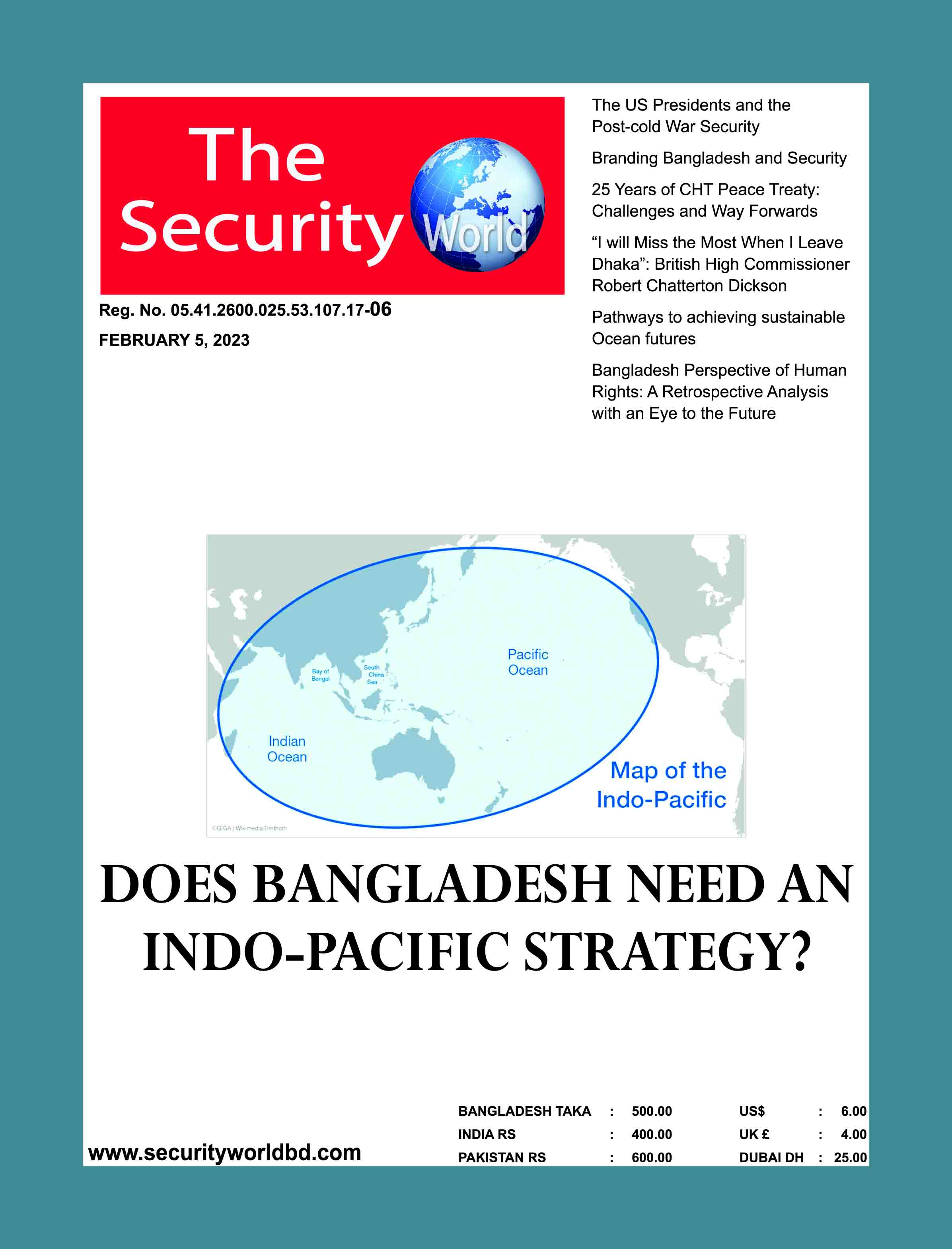
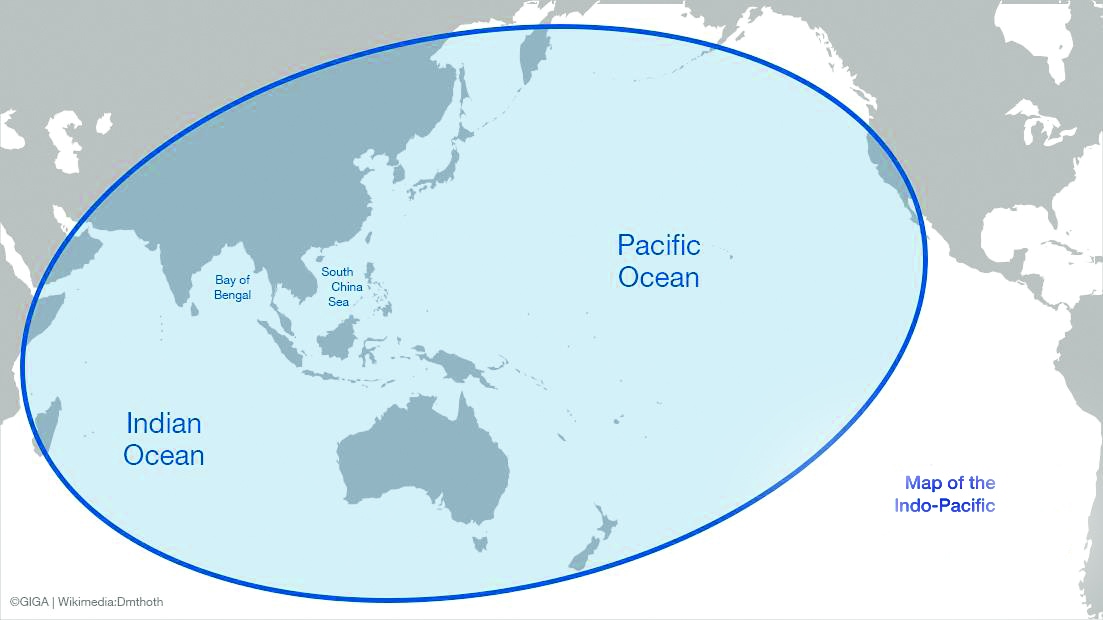
Let us consider the term “Indo-Pacific” from geo-strategic point of view. Sensibly, it should mean the geography straddling the Indian Ocean and the Pacific Ocean. The term has a rich textual past, but since the late 2010s, the term “Indo-Pacific” has been increasingly used in geo-political discourse. Recently, it has also taken on a symbolic link with the Quadrilateral Security Dialogue, or “Quad” — an informal grouping between Australia, India, Japan and the United States. Thus, the term Indo-Pacific has led to a change in our mental concept of Asia, and its geo-political value in strategic terms.
Recently, Indo-Pacific has occupied the strategic attention of major powers in their national security policy framework. The United States, Canada, France, European Union, ASEAN, Japan, Australia and India have all formulated individual strategic documents for the Indo-Pacific. An analysis of these documents reveal the intentions and interests of these countries. A summary of the major actors suggest that:
l The United States is the leader of the Indo-Pacific Strategy. Against the backdrop of China’s rise in the South China Sea and its Belt-and-Road Initiative, the US aim is to reshape alliances and partnerships to maintain Western influence in Asia.
l Japan is clearly united with India and the United States because Japan feels insecure as an island nation, and is concerned about China’s rising economic and military capabilities in the Indo-Pacific.
l Australia actively welcomes the “Indo-Pacific” Strategy promoted by the United States. Australia wants to improve and strengthen its presence and scope of influence in Southeast Asia.
l The French “Indo-Pacific” Strategy is the most ambitious one. The most important goal is to defend France’s sovereignty interests in the Indo-Pacific. Paris feels that its national interests have been challenged by China’s growing military power and international behavior. France will upgrade its military operational capability in the region.
l While France, Germany and the Netherlands have strategy documents for the Indo-Pacific, the EU-wide recently written strategy is a major development. It says that European economic and security prosperity—and the EU’s vision of its role in a multipolar world—is strongly linked to the Indo-Pacific region. As such, EU moves away from an exclusive focus on trade and investment based partnership to potential engagement with Indo-Pacific countries in security matters.
l The most ambivalent group in the Indo-Pacific is ASEAN. Indonesia and Singapore support the “Indo-Pacific Strategy” concept. ASEAN is caught between China and the United States. On one hand, they are afraid of the regional order change brought about by the rise of China militarily, and on the other hand, they do not want to lose their share in economic development brought about by the rise of China economically as well as strategic guarantees provided by the presence of the United States in the region.
l India has always been a country with great national ambitions and is one of the most important advocates of the concept of “Indo-Pacific Strategy“. Prime Minister Narender Modi has clearly spelt out India’s evolving approach towards Indian Ocean Region (IOR) in the form of five-fold “maritime panchamrit”. China’s interest in the western Pacific, and its increasing reliance on the Indian Ocean for trade, has begun to stimulate India. This intersection of maritime interests of a rising China and an emerging India on one hand, and the existant power of the US on the other, has begun to give “Indo-Pacific” a historical Mahanian character. This geo-political scenario with two Asian powers interceded by a non-Asian giant is euphemistically termed as “Asian Order”. However, it must be borne in mind that Indian and Pacific Oceans are also coveted by European Powers: Germany, the United Kingdom, France.
So, we see that Indo-Pacific is a most challenging geo-political reality where both continental and extra-continental actors are blended into each other. Why? The reason is China.
But China’s new approach to the World Order is to face the unified West and their Asian partners with systematic multilateralism. China’s new code is to make China leader against Western great-power interests in the Indo-Pacific. China’s “Global Security Initiative” is about opposing efforts to contain China’s military threat. China’s “Global Development Initiative” promotes China’s economic growth model, which can deal with even non-democratic countries without imposing conditions. China’s “Global Civilization” logic philosophizes that western universal human rights is a new form of colonialism.
It seems that China and the West with its Asian allies led by the United States are locked in a “security dilemma” in which it is rational that each side should strengthen its position. This fear of each other emanates from few flashpoints that have the potential to serious conflicts.
l Taiwan. Taiwan and America agree that a Chinese attack on Taiwan is not imminent. Of now, presumably China is apprehensive of US counter-attack. Taiwan is overhauling its defenses to prepare for Chinese invasion. Taiwan is a very delicate case. It is a democracy but isolated by a superpower China that denies its right to exist.
l North Korea. North Korea has conducted record number of weapons tests in 2022 and 2023. This year, it has tested underwater nuclear attack drone tests. These drones are capable of cruising underwater for hours before detonation. North Korea needs to bolster its defenses because it claims that the US-South Korean drills with US nuclear-capable B-52 strategic bombers, are rehearsals for invasion.
l So, fear psychosis is complementary. US ally Taiwan fears Chinese invasion, and China’s ally North Korea fears US invasion.
l South China Sea. Several countries have made territorial claims over South China Sea. Both China and Taiwan claim the entire South China Sea as their own within what is known as “nine-dash line”. But this claim overlaps virtually with every other country in the region that includes Indonesia, Vietnam, Brunei, Malaysia, Cambodia, Thailand, Philippines and Singapore.
l AUKUS. AUKUS is another flashpoint because of the nature of its intentions. It is basically a pact of America, Australia and Britain. This has threatening extra-regional components of American, Australian and European ambitions in Asia. AUKUS is intended to support high-end warfighting and combined military operations in the region with nuclear-powered submarines. Its alleged enemy is China.
l Myanmar. Myanmar is another flashpoint. Myanmar factors into the larger canvas of Indo-Pacific by pitting China, India and Russia on one side against the EU, AUKUS and America on the other. Myanmar is considered a fault-line of breeding insurgent-terrorists, and therefore, becomes a notorious route for exporting insecurities to its neighbors, particularly Bangladesh.
The geo-political landscape as explored so far can be summarized into some of the following essential geo-politics:
First, how China balances itself against the western powers and their allies led by the United States.
Second, how both China and the US are persuasive in prosecuting Indo-Pacific liberal order.
Third, how strong is ASEAN in keeping itself away from taking sides either with China and the US.
Fourth, how forceful is the logic that extra-regional military entente such as, AUKUS has the potential to flare into serious civilizational security dilemma.
Fifth, how prudent will China and India be in working together to make Indo-Pacific a zone free from western influence?
Sixth, how integrative is the approach of states and regional institutions in tackling life-threatening irritants, such as extremism, hyper-nationalism, insurgencies, irredentism etc.
Therefore, challenges and opportunities of the Indo-Pacific for Bangladesh tells us something like this:
l The geo-strategic location of Bangladesh is unique. It is the confluence of South Asia and South East Asia. Bangladesh crowns the Bay of Bengal in the Indian Ocean Region (IOR). Bangladesh needs a modern armed force with a strong navy having substantial partnership programs with regional navies, particularly Indian Navy.
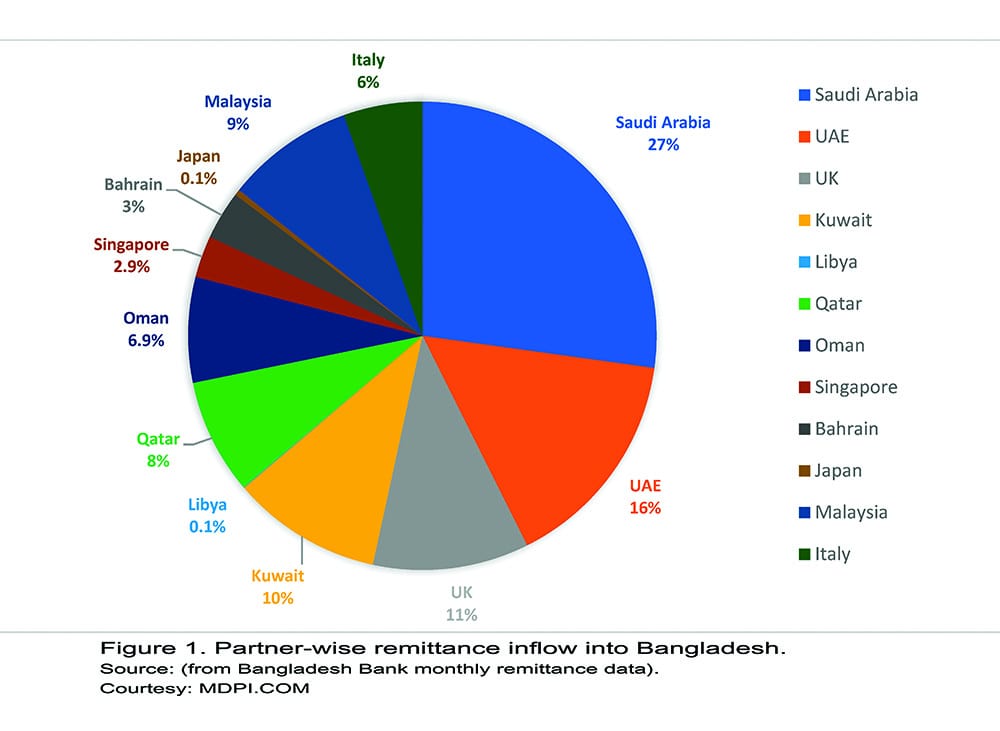
l Bangladesh happens to be a major source of migrant workers in South East Asia and the Middle East. Intelligence outfits can provide, supplement, acquire and analyze information about migration acting as intelligence to the embassies to ensure safe and secure migration to destinations.
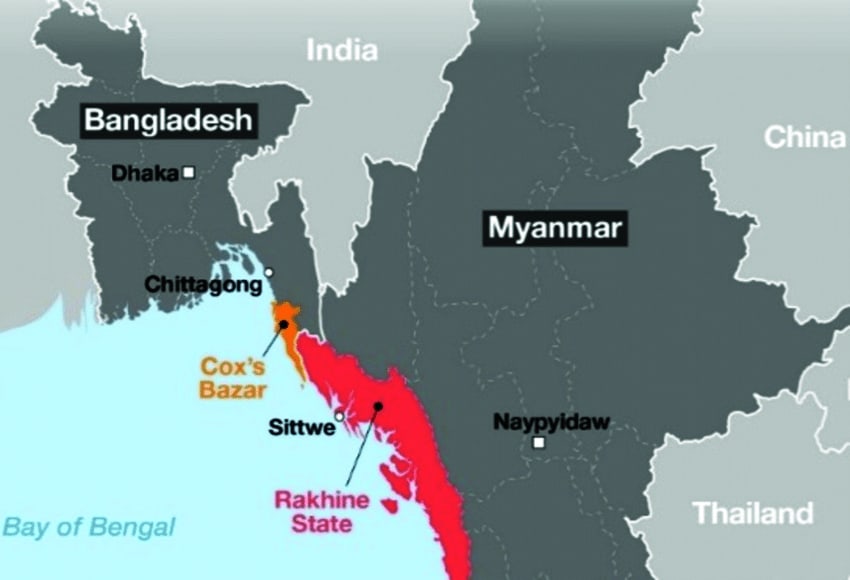
l Bangladesh historically has troubled relations with Myanmar. The exodus of Rohingyas has turned into serious security issue for Bangladesh. Bangladesh armed force should engage frequently with the Myanmar military junta. The strategy is not to let Myanmar think that Bangladesh military is weak to respond to excesses by Myanmar military junta in using Bangladesh territory for expelling Rohingyas.
l The military diplomats in the embassies should constantly upgrade the Heads of the Mission on their geo-political assessment of the Asia-Pacific. Their briefing must include threat analysis and militarization of the Indo-Pacific space, alliance shifting etc., so that superior authority at the Headquarters can make proper adjustments with strategic thinking. In fact, Defence Wing in each embassy is a necessity if we see closely the nature in which geo-political and geo-strategic significance of world politics has shifted toward Asia in recent times.
l In view of the changing perspective in the Indo-Pacific, military officials should participate more in strategic dialogues and defense consultations. Military officers should focus on studying latest literature on Artificial Intelligence, Cybernetics, Strategy etc., — subjects which deal with higher sciences in warfare.
l Defense Diplomacy must be made an integral component of our Foreign Office. This is a challenge. But this challenge can only turn into an opportunity if the diplomatic routes of both the Foreign Office and military diplomats are co-located.
The Indo-Pacific is becoming a focus of the coming World Order. It is the home of three rising great powers— China, India and Japan. Europe has its eyes on its resources as a fresh tour de force to Europe’s colonial days. Australia as a protégé of the West encircles it in a discreet ambivalence. ASEAN finds its great power envelopment as a constant vulnerability. Middle East is ruptured in the conundrum of uncertainty. Bangladesh as a small state has all on a sudden become a strategic player in the Indo-Pacific rivalry. Bangladesh’s challenge lies in actively participating in the strategic game by adopting a policy of Defence Diplomacy.
Air Vice Marshal Mahmud Hussain is a retired air force officer. He served as High Commissioner of Bangladesh to Brunei Darussalam from November 2016 to September 2020. He served as the Chairman, Civil Aviation Authority of Bangladesh (CAAB). Presently, he is working as the Distinguished Expert at Bangabandhu Sheikh Mujibur Rahman Aviation and Aerospace University (BSMRAAU).




More News From This Category