Setting a Boundary for Geopolitical Feuds
📝 Online Desk
🕐 2021-07-17 06:09:09

Li Jiming

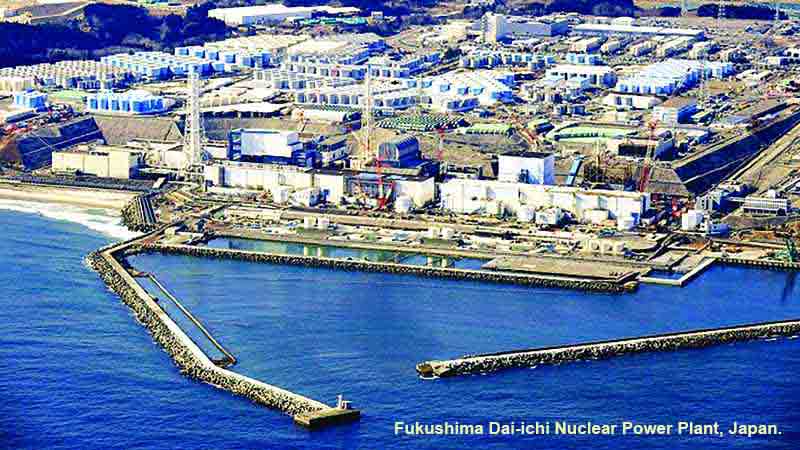
Not long ago, Japan announced that it would release more
than one million tonnes of radioactive water contaminated by the wrecked
Fukushima nuclear power plant into the sea, which was obviously an extremely
reckless decision and disturbing move that startled people all over the world,
especially those in neighbouring countries and local Japanese fishers.
The decision of the Japanese government will not only
jeopardize the interests of those people, but also threaten the global maritime
environment and international public health and security and in the end, damage
the common interests of the international community, including Japan itself. In
response, countries in the region, including China, Russia, South Korea and the
Philippines, and many international organizations have expressed their deep
concerns. It is not surprising that the Chinese government and public take this
matter very seriously. China and South Korea even summoned Japan’s ambassadors,
and “firmly opposed” the decision, as the contaminated ocean concerns their
proximity the most.
Greenpeace Japan issued a statement blasting the decision as
something that should be “strongly condemned”, which “completely disregards the
human rights and interests of the people in Fukushima, wider Japan and the
Asia-Pacific region”, and said “the Japanese government has once again failed
the people of Fukushima.”
A weird show taking all by surprise
Obviously, Japan made the decision without exhausting safe
disposal measures, without fully disclosing relevant information, and without
discussing thoroughly with neighbouring countries and the international
community first, and is therefore suspected of violating international laws and
rules. But just when everyone expects the country to place itself in an
“unprecedented position of isolation” in the region and beyond, something weird
happened.
Mainstream Western media, which often take a highly critical
stance on international affairs (especially if China is somehow involved),
chose to put their claws away this time even though Japan’s decision apparently
undermines wider human interests. Among them, The New York Times published one
article expressing only mild concerns, and The Washington Post stressed that
Japan would release the water only “after treatment”, in an apparent defending
and justifying tone.
Many also noticed that Western NGOs dedicated to human
rights or environmental protection have kept silent over the issue. Even the
Swedish environmental activist Greta Thunberg took a rather “neutral” stance.
She forwarded the news of the Fukushima water disposal on April 13th and
re-tweeted the decision without any comment, like most Western media, in contrast
with her public image of being very sharp-tongued on environmental issues.
In the meantime, the United States seemed to have already
sneakily lent its support to Japan, describing its decision-making process as
“transparent”. Antony Blinken, the US Secretary of State, even expressed
appreciation by tweeting “We thank Japan for its transparent efforts in its
decision to dispose of the treated water from the Fukushima Daiichi site”.
Interesting enough, while the US expressed its support to
Japan, it has maintained and reiterated a 10-year-long ban on imports of
farming and seafood products from the region near the site since the disaster
in March 2011. This makes the US, probably the only country that publicly
endorses the Fukushima water release plan, and at the same time, the first
country to halt food imports from the region “due to radioactive
contamination,” as stated on the website of FDA, renewed on March 4 of this
year—around 40 days before the Japanese government decided to dump the
contaminated water. “Divisions may detain, without physical examination, the
specified products from firms [in Fukushima and other prefectures],” the FDA
said in the alert, which means that corresponding items may be detained and
rejected for importation without examination.
Indulgence only for self-interests
It is crystal clear that the US government does not really
deem the Japanese move as harmless. Then people would ask, if the awareness of
risk is evident, why would the US government back Japan anyway and became a
cheerleader for Japan’s condemned move when its neighbours have all fiercely
protested against the decision?
A South Korean analyst said, the US’s sudden statement of
support for Japan’s release of the contaminated water came as a surprise to
many. It was also peculiar that the Biden administration would back a plan that
could cause serious harm to the global marine ecosystem, since the
administration has taken so much interest in climate change and other
environmental issues. The US appears to have sided with Japan on this issue for
diplomatic reasons, given its increasing need for Japan’s cooperation in its
China containment policy.
On the other hand, some analysts believe that Western
countries’ tolerance for Japan’s decision is not unrelated to their own
misdeeds of the last century. Before the ratification of the international
treaty banning the disposal of nuclear waste into the oceans in 1994, the
United States, the United Kingdom and others had for long been using the oceans
as garbage dumps and thrown in tons of solid and liquid nuclear waste, causing
irreparable damages to the global marine environment.
According to data from the International Atomic Energy
Agency (IAEA), from 1946 to 1993, 13 countries, including the United States,
the United Kingdom, France, Germany, Belgium, the Netherlands and Switzerland,
dumped more than 200,000 tons of solid nuclear waste into the sea. The United
States alone dropped more than 90,000 barrels and at least 190,000 cubic meters
of radioactive waste into the North Atlantic and Pacific Ocean.
Going beyond geopolitical feuds
That being said, many believe the major motive behind the
West’s indulgence for Japan is based on geopolitical calculations. Washington’s
quick support to Tokyo has sparked accusations, and it is a bad geopolitical
show, sending the wrong signal to the world that “political manoeuvres and PR
tactics can dilute or even whitewash all awful things”. This is what we ought
to worry the most. People with the basic sense of responsibility and morality
should ask two questions: Have we lost the capability to tell right from wrong
in this challenging world and challenging time? Should we set a boundary for
geopolitical feuds and go beyond it when dealing with some of the real problems
of global concerns?
No matter how divided the world is, either domestically or
internationally, as human beings we must have some common ideals to live upon.
Above all the political calculations of any party, race, nation or faith, there
is still some basic norms for us all, such as telling right from wrong. Anyone
with common sense would recognize that, it is not a good idea to storm any
legislative building no matter it is happening in Washington or Hong Kong; 5G
stations never spread corona virus; masks do help to protect you and your
families and friends during the pandemic; climate change is a reality rather
than a hoax; terrorism is still the common enemy of mankind whether it is in
New York during 9/11 or in Xinjiang; releasing nuclear contaminated waste water
into ocean is indeed putting us all in danger and should therefore not be
endorsed, and so on.
There is only one Planet Earth for us. On the evening of April 22nd 2021, when addressing the Leaders Summit on Climate via video link, Chinese President Xi Jinping pointed out that the international community needs to come up with unprecedented ambition and action, discuss ways to tackle this challenge, and find a path forward for man and nature to live in harmony. We need to act with a sense of responsibility and unity, and work together to foster a Community of Life for Man and Nature. The unprecedented pandemic has driven home to all of us that the world is indeed a community with a shared future where all rise and fall together. Be it in coping with the current crisis or in making the world a better place for everyone, we must stay in solidarity and work together as one. Whenever there is anything like denying climate change or dumping huge quantity of dangerous nuclear waste into the ocean, there must be someone standing out to chant “How dare you!”, like the Swedish girl Greta Thunberg once did.
Li Jiming is the Chinese Ambassador in Bangladesh.






More News From This Category