Ukraine-Russia War: Lessons Learnt So Far
📝
🕐 2022-05-08 12:49:17

Air Cdre (Retd) Ishfaq Ilahi Choudhury

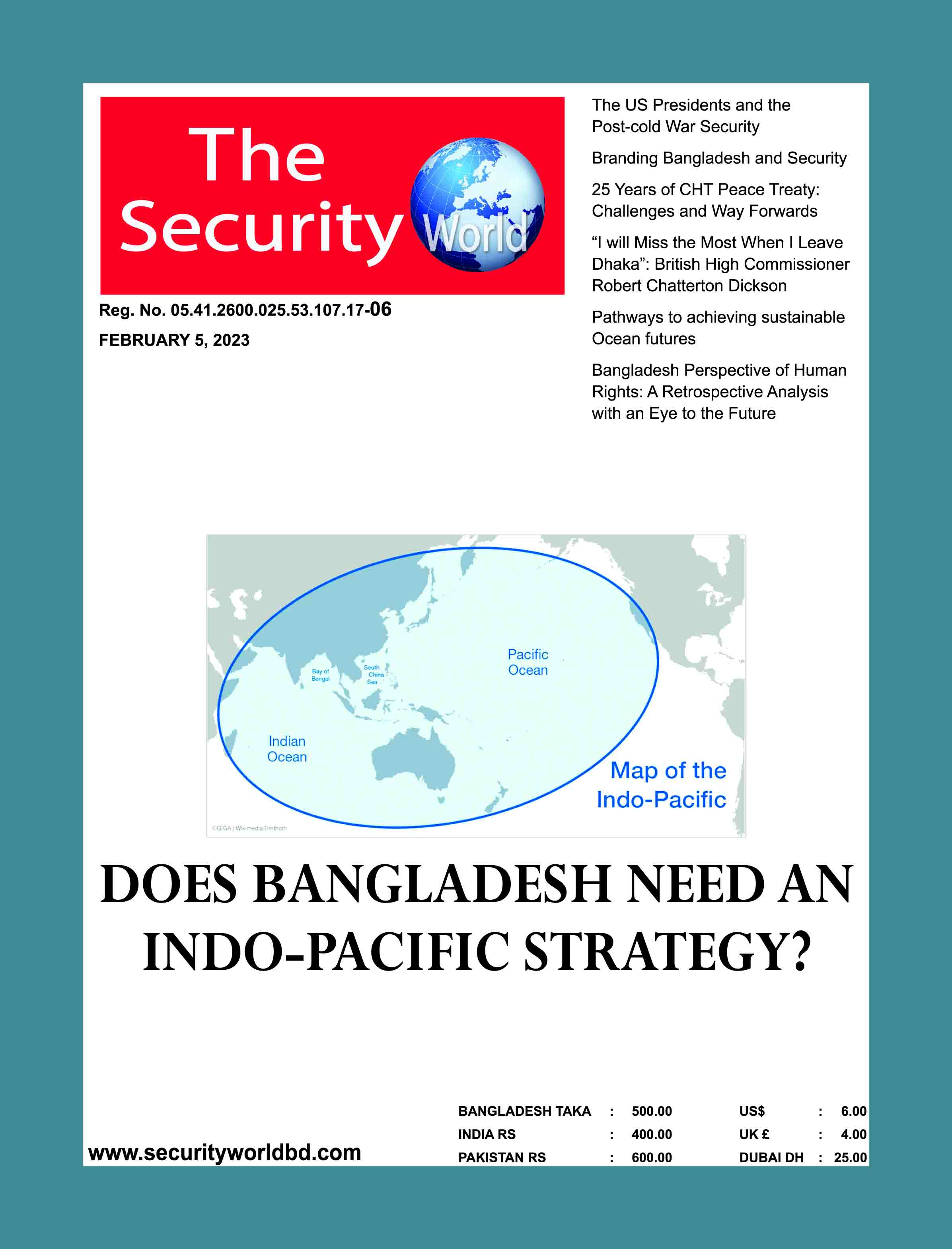
Russo-Ukraine war has entered its third month, a war that we all hoped would be averted. When Russia invaded on 24th February 2022, most pundits predicted that it would be a short war of may be a week or two. The Russian President Vladimir Putin had demanded a completely neutral Ukraine with a regime that is “de-Nazified and demilitarized”. Despite last minute assurance from the Ukraine President Volodomyr Zelenskyy that his country will not join NATO or EU, Putin decided to invade. While Putin, and in fact much of the world, expected a quick fall of Kyiv and a new Pro-Russian government installed there, the Ukrainian forces, despite being out-gunned and out-numbered, fought on. The Ukrainian forces, armed with the western anti-tank weapons, caused heavy loss of Russian armour. Soon the Russians had to retreat under fire from Kyiv front. Despite constant shelling and bombing, President Zelenskyy in his T-shirt, kept giving outdoor interviews seeking military and humanitarian assistance from the world community. I will try to give a commentary of events and lessons learnt so far, i.e. till 08 May 2022.
At the outset, both sides made serious miscalculations of each other’s intentions and capabilities. The Ukrainians didn’t take the Russian warning seriously that they were crossing the “Red Line” as they engaged in talks to join the EU, and NATO. The Russians, on the other hand, grossly underestimated the strength of the Ukrainian forces and the impact of the military aid from the NATO countries.
The Russians, on the first day of invasion, dropped para troopers to occupy the Gostomel airfield at the outskirts of Kyiv. The aim was to establish a bridgehead where reinforcement would be flown in from Russia and eventually launch a quick attack to occupy the capital. Things went wrong soon after the first batch of paras landed. The Ukrainians quickly encircled the small Russians forces, retook the airfield and prevented further reinforcement being flown in. Meanwhile, the main Russian column coming from Belarus faced stiff Ukrainian resistance. The advance also stalled because the mile-long armoured columns ran out of fuel. The Ukrainians could easily pick up the fuel bowers and destroy them with various anti-armour weapons. Once out of fuel the tanks were like sitting ducks for the Ukrainians to take out one by one. Meanwhile, the Russians forces in Gostomel suffered heavy casualties, some were taken prisoners while others managed to track back to the main line. The lessons learned here is that the Special Forces can hold on for a limited time only; unless they are quickly reinforced and replenished.
The Ukrainians, armed with NATO-supplied ‘Javelin’ anti-tank missiles, for the first time, gave an advantage to the infantry man in his fight against the enemy armour. Another game changer that appeared in the war was the Drones, inexpensive, easily operable and highly lethal. We have seen extensive use of drones in anti-ISIL war in Syria-Iraq and anti-Taliban war in Afghanistan. Drones provide real time picture of the target areas, and when armed with bombs or missiles, can carry out accurate pinpoint attacks. The Ukrainians have been using the drones, both for reconnaissance and attack, while controlling them from remote locations with data-link, sometimes using Personal computers. Thus, an ordinary citizen, with a knowledge of computers technology, could become a tank or artillery killer. Application of Drones in warfare opens up many new possibilities.
The destruction of so many Russian tanks in so short a period raised questions about the vulnerability of Tanks in the face of anti-tank weapons. In the past, the main weapon to fight a tank was another tank. But now, an infantry soldier carrying an anti-tank missile can challenge the dominance of tank. While in the past, the soldier had to get very close to the tank, and in many cases, he would be incapacitated before he could bring the tanks within his weapon’s range, now with weapons like the Javelin, he could fire from a distance while remaining out of detection and then quickly move away to a more secure location,. The missile would guide itself autonomously on the Tank. The Javelin climbs up as it approaches the target and then comes down with a high angle of attack on the tank turret, the most vulnerable part of the tank. The way the Russian tanks blew up after the Javelin hit, raised new questions about the tank design. There are inherent design flaws in the Russian tank that contributed to total destruction of the tank and instant death of all tank crew. One of the principle of deployment of armour is that it must be closely supported by infantry. Long columns of tanks in the open is easy prey for the infantry with its anti-tanks weapons and the Ukrainians took full advantage of it.
This war once again showed the vulnerability of manned aircraft, especially helicopters, to man portable surface to air missiles (SAM). In future wars, while manned aircraft will continue to be useful against high value targets, we shall see increasing use of unmanned drones and cruise missiles taking over much of the traditional roles of manned aircraft. Especially for countries with small defence budget, Drones offer a wide range of possibilities. Russian’s loss of the ‘Moskva’, the flagship of the Black Sea Fleet, on 14 April, apparently hit by two land based anti-ship missiles fired by the Ukrainians, once again raised the question of vulnerabilities of large warships to relatively inexpensive missiles. Subsequent enquiries raised the question of Russia’s Anti-missile defence system on board the ship, as well as serious questions of training of crew and their ability to fight fire on board. We have witnessed another new weapons system in action – Hypersonic cruise missile, called ‘Kinzal’ that the Russians launched against Ukrainian targets. We saw in the two Gulf Wars, as well as in Afghanistan, the use of subsonic cruise missiles, such as Tomahawk, that can be launched from air, surface and from the submarines while under water. As cruise missile detection and countermeasures became available, the emphasis shifted to developing extremely high speed cruise missile that travel up to 7-times the speed of sound. The Russians used Kinzal to attack underground weapon storage depots as well as large surface installations. The Americans, for sure, will now develop a hypersonic missile of their own, as well as a counter measures to defeat the Kinzal; another race will be on.
Once Putin realized that he cannot get to Kyiv and cannot bring about a regime change, he went for ‘Plan ‘B’ - to intensify attack from south and east to seize eastern Ukraine’s Donbas region. In fact, Russian troops were in the southern and eastern Ukraine since 2014 when they occupied Crimea and was covertly helping the Anti-Ukraine separatist forces in Donbas region – “Donetsk People’s Militia” and “Lugansk People’s Militia”. These militias enjoy support of the local people of Russian origin. Ukraine considers these forces as terrorists and had been fighting them for years, whereas Russia recognizes them as freedom fighters and accuses the Government of Kyiv of large-scale human rights violation in the region. One of the pro-Ukraine irregular forces operating in the region is Azov Battalion, a neo-Nazi group of Ukrainians, who have often been accused of committing atrocities on ethnic Russians in the region. Now that Russia has recognized the two secessionist republics, these two militias can operate as regular forces. As of today 08 May, fighting is going on throughout the eastern Ukraine and Russian Army is making slow but steady progress. Putin’s aim now, it appears, to take control of Donbas region of Eastern Ukraine. Once that happens, Ukraine will lose half of its coastline and it will be left with Odessa, as the only port. If Russia can capture Odessa, Ukraine will become a land-locked country and its economy will be in serious jeopardy. However, Russian forces will find the going increasingly difficult while the Ukrainians are able to acquire more sophisticated western weapons.

Meanwhile, the Russians have been using their massive artillery and armour firepower to indiscriminately bomb the Ukrainian cities and towns. These are reminiscence of the destruction of Groznyy in Chechnya (1999) and in Aleppo in Syria (2012-2016). In both cases, the Russians simply flattened the cities in order to demoralize the defenders. The video footage emerging out of the eastern port city of Mariupol, is truly shocking. However, the lessons learnt from WWII or Vietnam and in more recent times in Syria, Afghanistan or Yemen is that mass bombing of civilian targets rarely break the national morale, rather it strengthens the national will to fight.
As the fighting is entering into a long drawn affair, Russian President Putin will find it increasingly difficult to continue the war. After all, Russian economy, mostly based on the export of oil and gas, is smaller than that of South Korea. With western economic sanction slowly tightening, how long will he be able to bear the extra defence burden? In 1991, the West won the Cold War without having to fire a single bullet, mainly because the Soviet Union with its much smaller economy could not match the defence expenditures of the West. Almost the same situation may arise now – Russia may go bankrupt just to put up with the Ukraine war. And there lies the danger.
Recent warning of a nuclear response coming from President Putin and his foreign Minister Sergey Lavrov is more out of frustration rather than a deliberate strategy. Even at the height of Cold War, no Soviet leader ever uttered these words, knowing fully well that a nuclear war will destroy everything that the humanities, including the Russians, have achieved over centuries. There will be no winner, only Mutually Assured Destruction (MAD). Why is the warning then? Putin would have to show some gains out of this war to his people before he goes to negotiating table. If he can hold on the eastern Ukraine and Crimea, he can be seen as a winner in this conflict.
While the war goes on there are efforts to end this crisis, both within UN and outside it. While the world was just recovering from two years of debilitating Covid Pandemic, the Russo-Ukraine war has set the economic recovery process into a spin. The oil price has hit the ceiling and so are the commodity prices. The poor and under developed countries of the South are the worst affected. Bangladesh too is paying a steep price. Both Russia and Ukraine are important trading partners of Bangladesh. Both are important destinations of our readymade apparels and they are also important source of our grain and edible oil import. We can ill-afford any long time disruption of the supply chain. So far, it appears that the war must first enter into a stalemate before any meaningful negotiation could start. The only practical solution will be an international guarantee of Ukraine’s neutrality and sovereignty, a declaration of no further eastward expansion of NATO. In return, Russian forces must withdraw from eastern Ukraine, if not from Crimea. Ukraine must guarantee autonomy to the eastern Ukrainian states of Donetsk and Lugansk and ensure civil liberties and human rights of all Ukrainian citizens of Russian origin. As we stand today, common grounds for negotiations remains a mirage.
Air Cdre (Retd) Ishfaq Ilahi Choudhury is a Security Analyst and former Treasurer of Asia Pacific University (UAP).



More News From This Category